Professional alarm systems
NetCom Security Group designs and installs professional alarm systems for homes, businesses and sensitive sites. Technologies, sensor integration, transmission paths and monitoring options are selected around the assessed risk and the operational requirements of each property.
Reliability, resilience and verified performance
A professional alarm system is a security solution designed, configured and installed by qualified professionals, following strict technical criteria. It is not merely a detection system.
Professional systems are characterised by:
- High reliability
- Self-monitoring
- Protection against faults, tampering, interference and sabotage attempts


Stable connectivity
Our professional alarm systems feature supervised transmissions, anti‑jamming protection, stable and redundant connectivity across multiple channels, avoiding reliance on a single domestic Wi‑Fi network.
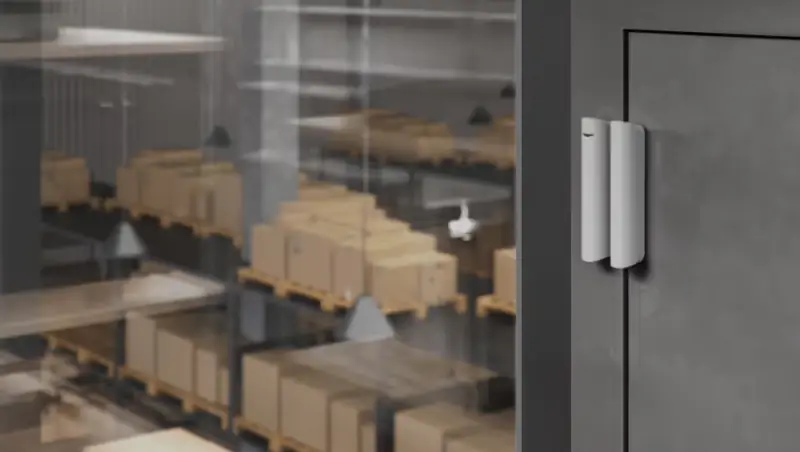
Tamper protection against opening, removal, masking and other neutralisation attempts is selected according to each device’s functions and the assessed risk: not every component detects the same attempts.
Grade 3 security standards
Grade 3 can be specified where the assessed risk and project requirements call for it. A system can only be described as Grade 3 when the required components and the overall installation meet the applicable standard; it is not a generic label for every professional alarm system.


Limited building work
Current technologies may allow Grade 3 solutions to be implemented with limited or no invasive structural work, depending on the site and the selected devices. Wireless, wired, dedicated-line or fibre architectures are chosen case by case after a survey of the building, risk and architectural constraints. Protected or sensitive properties therefore require a feasibility check before the solution is confirmed.
Dedicated backup
Dedicated backup power and redundant communications can help maintain the configured functions for a defined period when mains power or a communication path is unavailable. The achievable autonomy depends on the system design, battery capacity, loads, transmission paths and maintenance. These are project-specific systems that require professional assessment, configuration, installation and periodic testing.

Frequently asked questions
What is the difference between an alarm system and a burglar alarm?
In everyday language the terms are often used for the same need. An intrusion alarm system comprises a control panel, detectors, signalling devices and communication channels. The choice depends on what needs protecting, how it is used and the performance required: the security grade is one of the elements of the project.
Is a wireless alarm system as secure as a wired one?
A wireless system can also meet high protection needs, when components, configuration and installation satisfy the project requirements. For grade 3, the level must be verified on the whole system. The choice between radio and cable considers the structure of the building, coverage, power supplies and maintenance: wireless can limit new cable runs, while the site survey identifies the most suitable solution for the spaces to protect.
How are false alarms avoided?
They are reduced through the choice and positioning of detectors, calibration and tests in real conditions of use. Vegetation, animals and habitual movements must be part of the project. Where provided, photo or video verification helps to understand the event before organising a response.
What happens if the power or the internet line fails?
With a properly sized backup power supply, the system can keep its planned functions during a blackout. If configured and available, a cellular channel can keep sending alarms when the main connection is down. The project considers the control panel, devices and communication equipment required, also defining fault alerts. Actual autonomy depends on consumption and battery condition: sizing, tests and maintenance help to maintain the continuity planned for the property.
What is grade 3 of an alarm system?
The CEI EN 50131 series defines requirements and security grades for intrusion systems. Grade 3 covers scenarios with experienced intruders and suitable tools. It can be considered for homes with valuable assets and exposed businesses, but the choice depends on the risk and compliance must be verified on the whole system as built.
How much does a home alarm system cost?
The cost of a home alarm system depends on floor area, number of doors and windows, wired, wireless or hybrid design, protection grade and linked services. NetCom Security Group does not publish a price list because every system starts with a site survey of access points, perimeter and daily use; a written quote with itemised lines follows. An apartment and a villa cannot be compared with a single figure.
Can a home alarm system be tax-deducted with the 2026 security bonus?
Yes: a burglar alarm installed in a home counts as a building-recovery work and, for 2025 and 2026 expenses, qualifies for an income-tax deduction of 50% on the main residence and 36% on other properties, up to €96,000 per unit, spread over ten annual instalments. The higher rate applies to the owner or holder of a property right; a monitoring-service fee is not deductible. Source: Italian Revenue Agency, updated October 2026; confirm your case with your accountant.
Does an apartment need an alarm system, or only a villa?
It makes sense in both: an apartment has less floor area but often less visible entry points, such as the front door, balconies and lower-floor windows. NetCom Security Group designs the system around the real risk of the property, not its size: an apartment usually needs fewer devices, with the same design rule. The site survey decides what to protect and at what grade, up to grade 3 of the CEI EN 50131 standard.
Can a connected alarm system be hacked over the Internet?
No connected system is risk-free, but remote access can be protected: personal credentials for every user, two-factor authentication enabled, up-to-date firmware, a network for the alarm separate from the home network, and encrypted communication with the cloud service. NetCom Security Group sets these measures up at installation and reviews them during maintenance, because a control panel left on factory settings is the most common weak point.
Can the alarm be linked to a security monitoring service?
Yes: the system can send alarms to a private security service that checks the cause and dispatches a response. NetCom Security Group works with security firms selected to fit each family or company; the choice is assessed during the site survey together with the rest of the system. Monitoring is a separate service with its own contract, which is why its fee is not deductible as building work.