Nuclear bunker autonomy: energy, water and communications
NetCom Private Value
A shelter is autonomous only if energy, water and communications last for the whole planned time.
Structure and air make the shelter habitable; energy, water and communications make it liveable for hours or days. They are the items most often underestimated, and the first to limit the real length of stay.
This page explains how the autonomy of a private shelter is sized and which choices the client must make before the detailed design.
Energy, water and communications
What you really need to stay inside for the planned time.
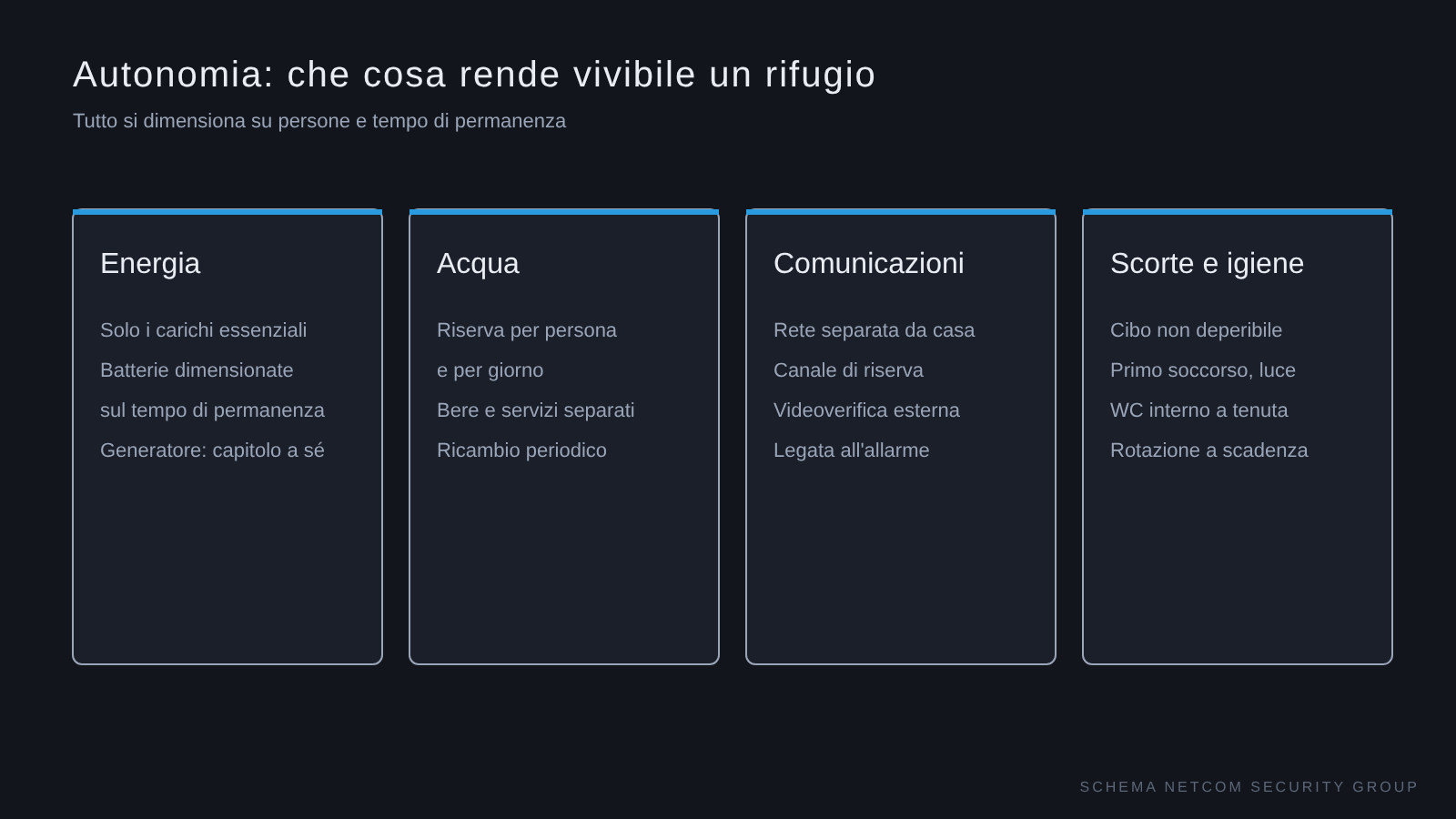
Energy: how much you really need
Count only the essentials
Ventilation, lighting, communications, any pumps. The rest (electric heating, cooking) is decided later, because it multiplies the batteries.
Batteries sized on time
A UPS covers the essential loads for the planned length of stay, with a margin. Capacity is calculated, not estimated.
When a generator is needed
For long stays dedicated generation may be needed, with a protected exhaust and safely stored fuel: it is a design chapter of its own, with its own constraints.
Separate, don't depend
The shelter connects to the home's supply to recharge, but it must keep working when the house has no power.

Water: reserves and drainage
Water reserve.
It is sized per person and per day of stay, separating drinking water from water for sanitation. Tanks, periodic renewal and the draw-off point are part of the design.
Sanitation.
A shelter used for more than a few hours has an internal toilet. Drainage needs a solution that does not compromise airtightness: a dedicated pump, a collection tank or a dry system, depending on the case.
Food and supplies.
Non-perishable supplies, first-aid kits, backup lighting, tools for the emergency exit. They are kept in dedicated cabinets and replaced when they expire.
Communications: staying reachable without exposing yourself
Independent network
A network separate from the home network, with outbound traffic only and no access from outside: it reduces the risk that a cyber attack on the home reaches the shelter.
Backup channel
A second means independent of the home line (mobile or satellite, depending on the site) to call for help if the main line goes down.
Seeing outside
The home's video verification stays visible from the shelter: whoever is inside decides when to come out based on information, not guesswork.
Integration with the alarm
The home's intrusion system (in Italy the reference is standard CEI 79-3) and the shelter are designed together, with a single point of contact.
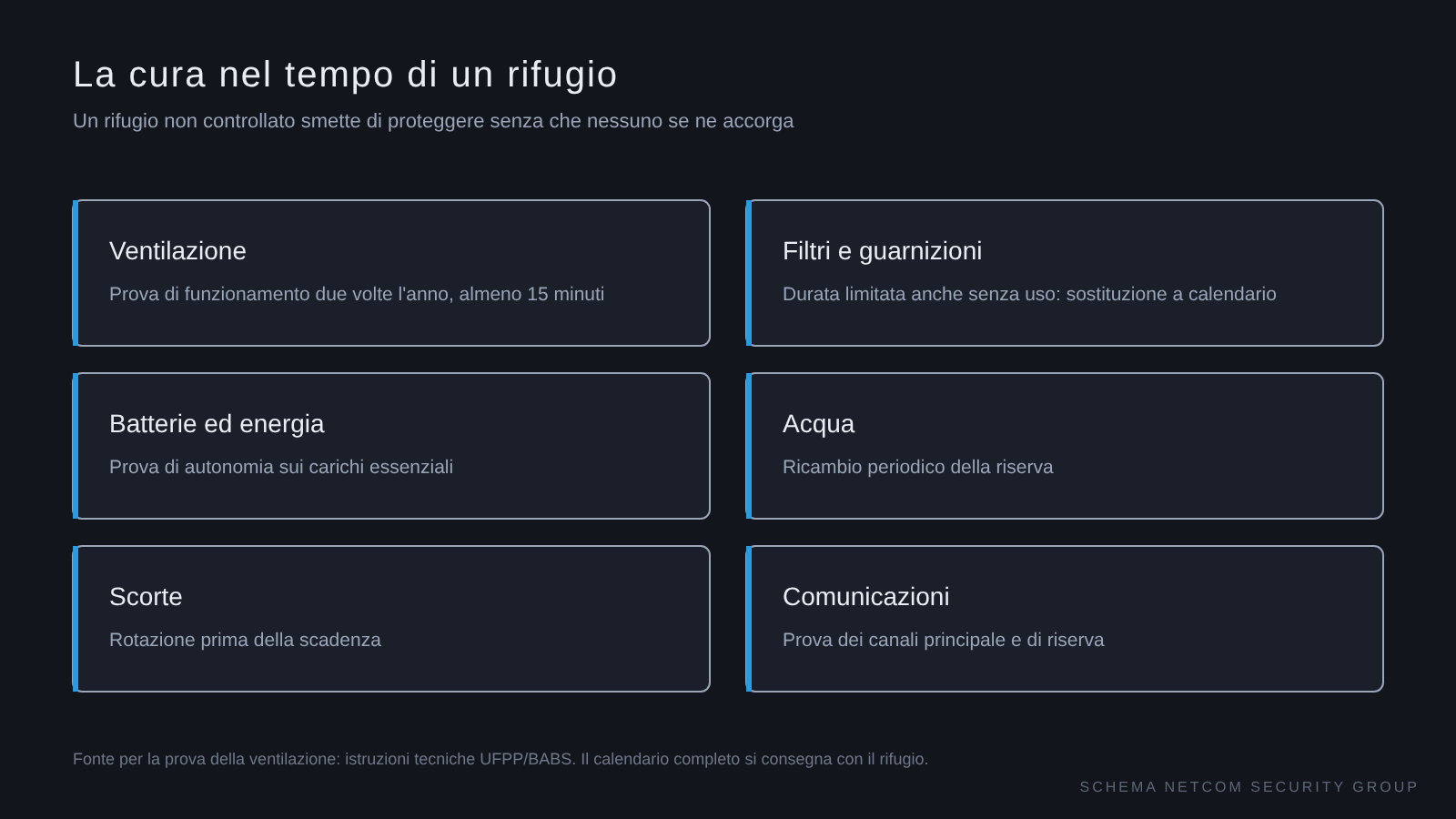
Over time
What to check so that the shelter stays ready.
Next step
The other guides, the free guide and direct contact with NetCom.
More guides on private shelters
← Back to the full guide: private bunkers and shelters by design
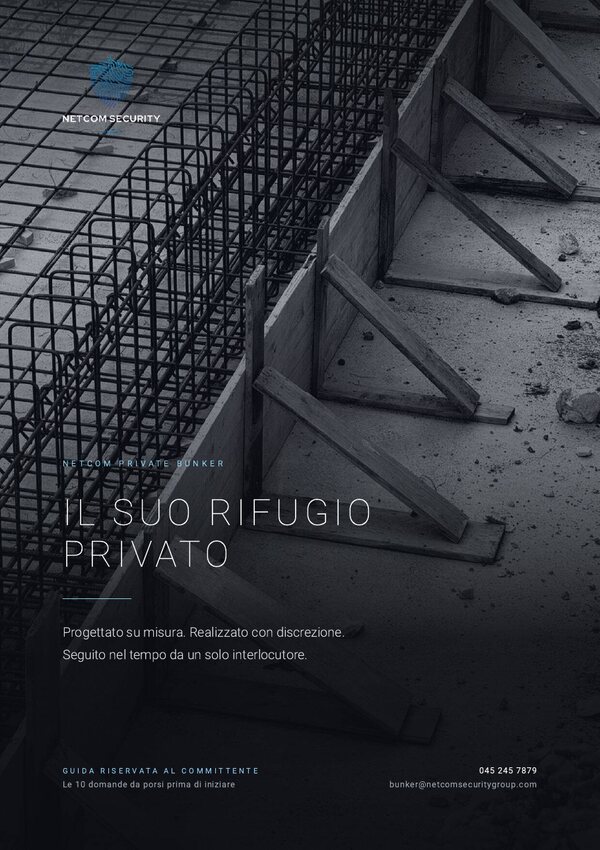
The 10 questions to ask before designing a shelter
Risk, people, length of stay, air, structure, permits and long-term care: the questions we ask in the first meeting, with a diagram of a private shelter. Fill in the form below: once confirmed you will find the link to download the guide (in Italian).
Get the guideLet's talk about your project
A first confidential conversation helps us understand whether a shelter is the right answer and where to start. Write to us or call us directly.
bunker@netcomsecuritygroup.com
Monday–Saturday, 9:00–17:00 (CET)