Advanced video surveillance and control
NetCom Security Group designs and installs professional video-surveillance systems for homes, businesses and sensitive sites. Cameras, analytics, recording, transmission and monitoring functions are selected according to the context, the assessed risk and the applicable privacy requirements.
Intelligent monitoring
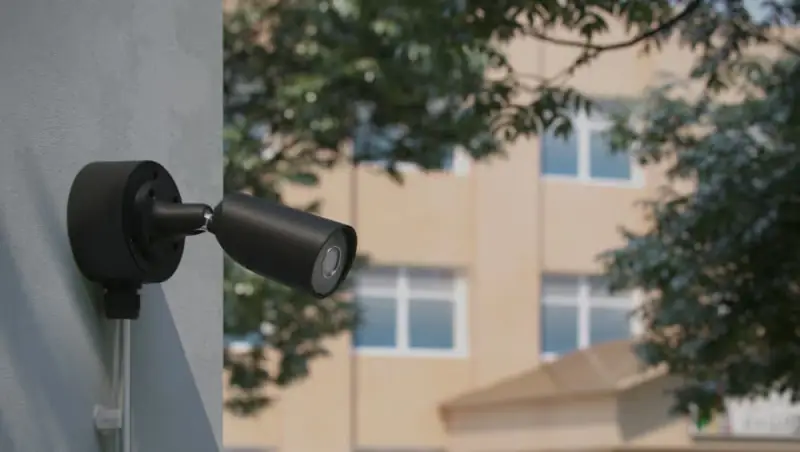
Professional video surveillance can go beyond recording. Depending on the cameras, analytics and configuration selected, it can support real-time monitoring and highlight defined events or anomalies. It can protect perimeters, access points and transit areas and integrate with other security systems, subject to project requirements and applicable rules.


Automated response
Where configured and legally appropriate, video analytics can classify defined events such as intrusion, loitering, unauthorised crossings, people or vehicles, and can support searches using selected attributes. Functions involving faces, number plates or biometrics require a specific technical and privacy assessment. The system can also trigger authorised actions—such as gates, lighting or acoustic deterrents—according to the programmed rules.
Detection and recognition
Event-classification algorithms can help reduce false alarms by distinguishing defined targets from common environmental disturbances, but performance depends on scene, weather, positioning, calibration and maintenance. Search functions also depend on the capabilities enabled for the specific system and on the applicable privacy rules.


Thermal cameras
In suitable projects, thermal cameras can support perimeter detection across large outdoor areas and in low-light or reduced-visibility conditions. Performance still depends on range, weather, installation geometry, target characteristics and calibration, so capability must be verified during design and commissioning.
Autonomy and resilience
Professional video-surveillance systems can be designed with redundant transmission paths, anti-tamper measures and backup power. These measures help maintain selected functions during defined faults or outages; actual autonomy and continuity depend on the installed architecture, configured loads and maintenance plan.

Frequently asked questions
Is an authorisation needed to install cameras?
It depends on where they are and who uses the area. The presence of the system must always be indicated with a sign and the privacy notice made available. If anyone works in the recorded area, Article 4 of the Italian Workers' Statute requires, before installation, an agreement with the union representatives or authorisation from the Territorial Labour Inspectorate. NetCom Security Group discusses this during the site survey, before the quote.
How long can the images be kept?
For the time strictly necessary, normally measured in hours or a few days. Longer retention is possible but must be justified and documented. It is a system parameter, not a separate formality: the overwrite time is set on the recorder during configuration and stays written in the documentation.
Can I view the cameras from my phone?
Yes. Remote access allows live streaming and checking of recorded images at the moment of an alarm. It is the function that changes daily management the most, because it lets you understand what is happening before moving or sending someone.
Do the cameras work at night?
Yes, with different technologies depending on the scenario. Where light is insufficient, infrared illuminators or sensors designed for low light are used. On large outdoor areas, thermal cameras detect a presence regardless of light, and for this reason they can also act as a perimeter sensor.
How many cameras are needed?
It is not decided in advance. It depends on how many entry points there are, on what must be recognisable in the image, whether a presence, a face or a number plate, and on lighting conditions. One well-placed camera is worth more than three placed at random: that is why NetCom Security Group defines the number after the site survey, not before.
Do cameras in a company require a union agreement?
Yes, if the cameras can record employees: Article 4 of Italian Law 300/1970 allows installation only for organisational, production, workplace-safety or asset-protection reasons, after an agreement with the unions or, failing that, authorisation from the National Labour Inspectorate. A privacy notice and signage are also required (GDPR, EDPB Guidelines 3/2019). NetCom Security Group prepares the technical report and floor plans the filing needs.
What can AI cameras really recognise?
AI cameras tell people, vehicles and animals apart from rain, insects, shadows and moving branches, and can raise an alarm only for the event that matters, such as a person crossing a virtual line. They do not read intentions, and results depend on light, angle and position: NetCom Security Group selects and tests cameras on the actual site, cutting false alarms before commissioning.
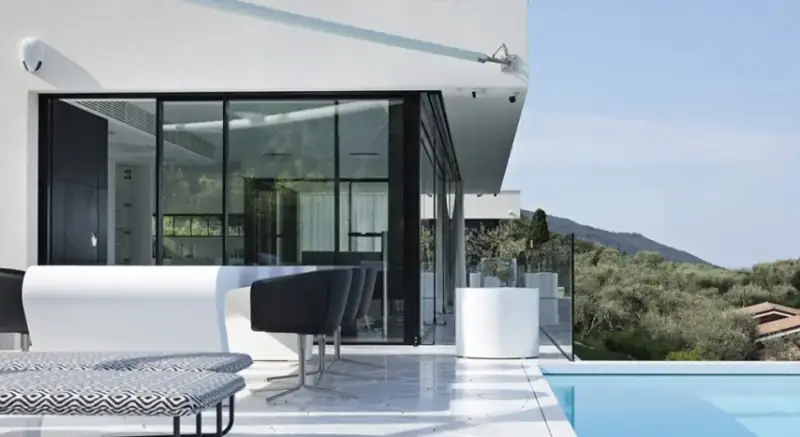
How many cameras does a villa with a garden need?
There is no fixed number: it depends on entry points, perimeter, blind spots, lighting and the goal, whether to deter, detect or identify. For a villa the starting points are the entrances and the perimeter, then the sensitive areas are added; NetCom Security Group sets quantity and positions after the site survey, with a technical field-of-view study carried out with dedicated software. A few well-placed cameras are worth more than many random ones.