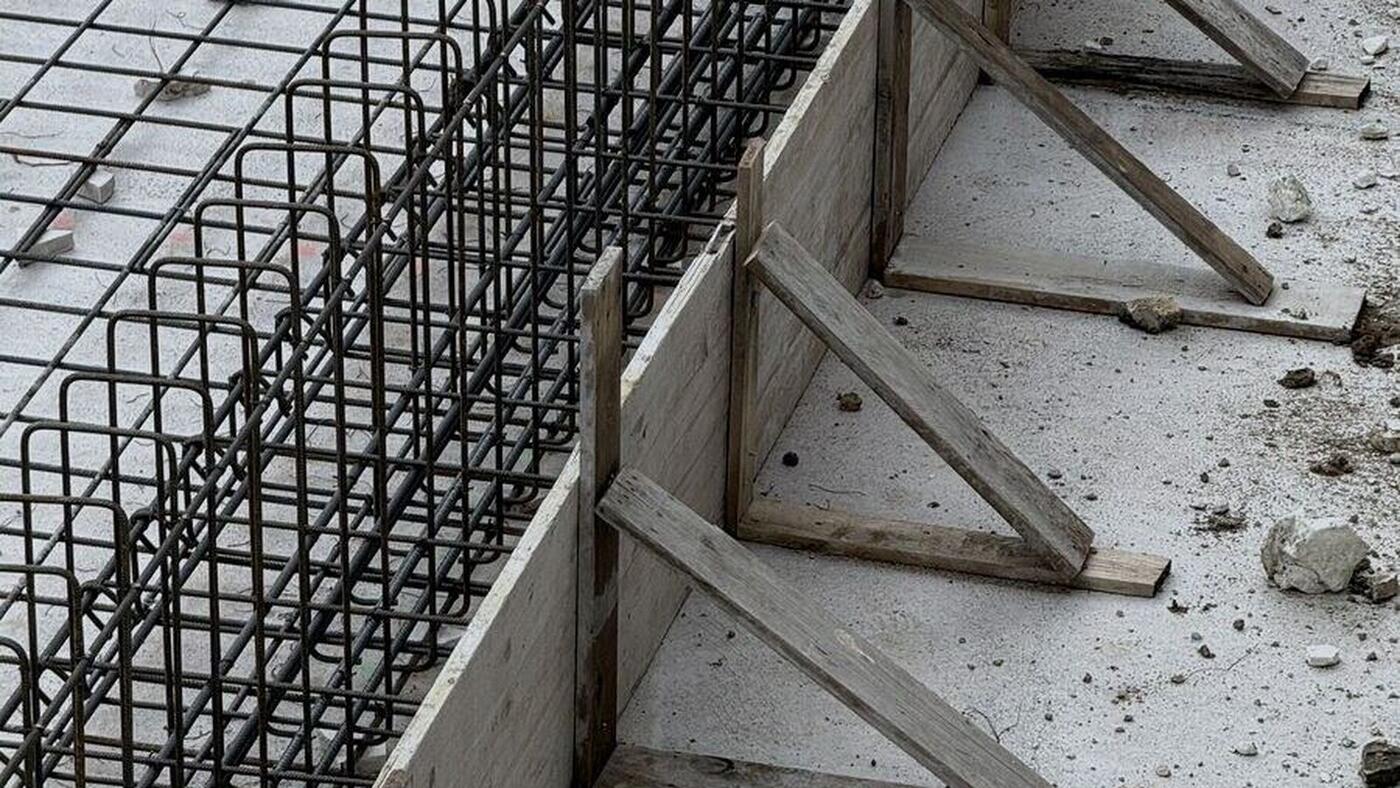
In brief. A shelter door has to do three different things: seal airtight, withstand the shock wave of an explosion and, in a private shelter, resist an attempt to force it. These are performances verified by different tests, and a certificate for one does not prove the others. In Swiss shelters the armoured door is made of reinforced concrete, has a rubber seal and a device that allows occupants to free themselves from inside.
How a Swiss shelter door is built
The brochure "Il rifugio" (The shelter) from the Federal Office for Civil Protection (FOCP, UFPP in Italian), June 2023 edition, describes armoured doors and covers made of concrete, which also have a protective function. Before the shelter is occupied, the ordinary doors used in peacetime are unhooked, and checks are made that the rubber seal is in place, that the door closes properly and that the locking works. Where the threshold is removable, it must be screwed to the floor with all its screws.
Then there is the self-release device. The FOCP brochure on large shelters, October 2024 edition, lists its parts: a square opening in the frame, a key, a square tube, a threaded rod with a nut. As the name suggests, it is used to free oneself from inside if the door remains jammed. The shelter maintenance leaflet published by the civil protection service of the Canton of Lucerne, 2023 version, includes it among the checkpoints for doors built from 1970 onwards.
The dimensions can be surprising. In an August 2026 report, NPR described the entrance to the University of Bern's shelter, with a reinforced-concrete door about thirty centimetres thick. The large public shelter built inside the Sonnenberg motorway tunnels in Lucerne, reported on by Swissinfo in 2016, had doors 1.5 metres thick weighing 350 tonnes.

Airtightness: the seal matters as much as the leaf
A shelter protects against contaminated air thanks to filters and a slight internal overpressure: the air inside is at a slightly higher pressure than the air outside, so unfiltered air does not get in through the gaps. The door is the point where the envelope is interrupted, and its airtightness depends largely on the seal.
In Finland the issue was raised by the engineers' association, as the public broadcaster Yle reported in March 2022: the condition of many shelters in older apartment blocks is little known, and a poorly maintained door seal can let in toxic fumes and gases. The Lucerne leaflet turns the same concern into a checklist: no loose rubber seals, armoured doors and covers free of rust, to be treated and repainted if necessary.
The relationship with the air system is explained on the page on shelter air, ventilation and filtration.
Pressure: the door is part of the structure
The FOCP brochure on large shelters states that the envelope withstands an overpressure of at least 1 bar, that is, about 10 tonnes per square metre. The door must bear the same load, and with it the frame and the wall that holds it. The Swiss technical instructions for protective structures, December 2025 version, make this explicit in a detail: within precise limits, they exempt from analytical verification slabs and walls without armoured doors that meet a minimum reinforcement. Where there is a door, the calculation is done.
The expected lifespan is long. The FOCP component lifespan table, updated in February 2022, gives 80 years for armoured doors and covers. This applies to type-approved elements, correctly installed and inspected by the authorities at least every ten years.
The inspection is no formality. During an exercise at the Sonnenberg in 1987, Swissinfo recalled, one of the large doors failed to close properly. In December 2024 Reuters followed an inspector in the Canton of Vaud: in one of the shelters visited, the door did not move when pushed to close it. An armoured door that does not move is an obstacle for those who need to get in.
Burglary: another test, another standard
In a private shelter another requirement is often added, because the room is also used as a safe room against intrusion. For burglar resistance in Europe the reference is the EN 1627:2021 standard, which, as summarised by the Swiss standards association SNV, classifies doors and windows according to the time and tools needed for a successful break-in.
It is a test of a different kind. A door that withstands a shock wave is not thereby classified against forced entry, and a certified burglar-resistant door has not been tested for gas-tightness or under a shock wave. When a supplier claims both, it is worth asking for separate test reports, covering the assembly of door, frame and installation and not just the leaf. A component certificate does not prove the performance of the complete solution.
A typical mistake: thinking about the door last
It happens that the door is chosen once the design is finished, when the opening is already fixed. That way, however, you lose control over weight, opening, manoeuvring space, anchorages and the routing of services. The opening direction and the space in front of the door must also be planned in the knowledge that, as the FOCP points out, the main entrance may be blocked by debris: that is why every Swiss shelter also has an emergency exit or an escape tunnel. The reasoning on exit routes is on the page on structure, doors and exit routes.
NetCom's view
"A panic room can never become a bunker, but a bunker can become a panic room." The door explains this well: a shelter door, designed for pressure and airtightness, can be supplemented at the design stage with burglar-resistance requirements and internal locks; a burglar-resistant door does not by itself acquire airtightness and pressure resistance. The differences are described on the page on safe rooms and panic rooms.
NetCom coordinates the security project starting from the risk assessment. Structures and special doors and frames are verified by qualified professionals, installation is entrusted to selected partner companies working to NetCom protocols, and the door specifications remain confidential.
Frequently asked questions
Can a household security door serve as a bunker door?
No. A burglar-resistant door is tested against forced entry, not for gas-tightness or against a shock wave. A shelter door must provide these performances together with its frame and wall.
What material are Swiss shelter doors made of?
According to the FOCP, armoured doors and covers are made of reinforced concrete, with a rubber seal, a locking system and a device that allows occupants to free themselves from inside.
How often is a shelter door inspected?
In Switzerland the authorities inspect shelters at least every ten years. Before each occupation the owner checks the seal, closing and locking; the Canton of Lucerne leaflet also requires rust to be removed.
If you are considering a private shelter and want to understand what performance to require of the door, NetCom's page on private bunkers and shelters explains how to arrange an initial confidential conversation.
To assess a shelter on your property: Private bunkers and shelters · Preliminary shelter check · Who builds private bunkers in Italy · Bunker cost
Sources
- Il rifugio (The shelter). Information on the purpose, structure and use of public shelters — Federal Office for Civil Protection (FOCP), June 2023.
- Grandi rifugi (Large shelters). Information on shelters for 200 to 800 people — FOCP, October 2024.
- Technical instructions for the construction and sizing of protective structures (ITC) — FOCP, version of 5 December 2025.
- Komponenten und Ausrüstung nach TWP 1966 bzw. 1984 (Lebensdauer) — FOCP, as at 17 February 2022 (document published by the Canton of Lucerne).
- Merkblatt für den Unterhalt von Schutzräumen — Canton of Lucerne, version of 5 July 2023.
- Understanding SN EN 1627:2021 - Requirements and Classification for Burglar Resistance — SNV, Swiss Association for Standardization.
- Engineering association: Condition of civil defence shelters in older apartment buildings largely unknown — Yle, 4 March 2022.
- Switzerland plans revamp of Cold War-era nuclear bunker network — Reuters, 13 December 2024 (republished by Daily Maverick).
- The forgotten underground world of Swiss bunkers — Swissinfo, 1 September 2016.
- Switzerland is a neutral nation but has more nuclear bunkers than any country in the world — NPR, 8 August 2026 (republished by OPB).