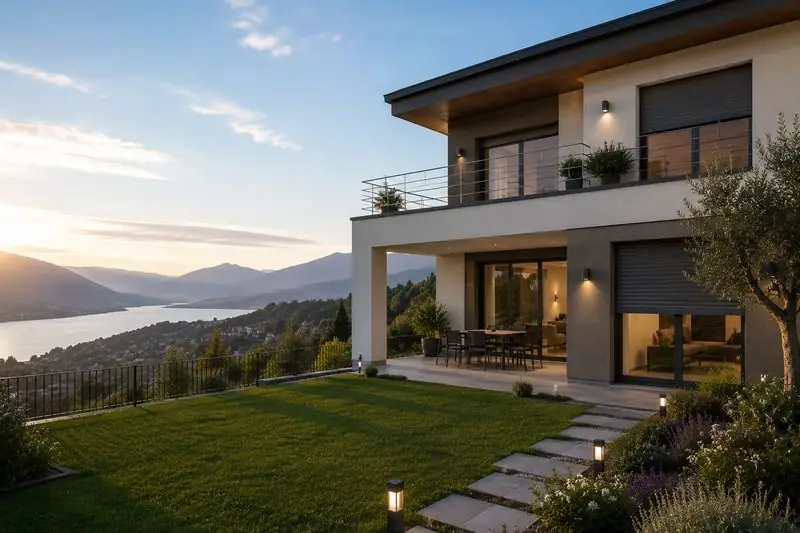

A house overlooking a lake keeps a familiar landscape, but every return may find different conditions. The place passes through the seasons, while the property is prepared, used and looked after by people with different roles. Security must understand this continuity between presence and change.
Around the lakes of Northern Italy, the design connects with the specific property and the information describing its surroundings. Data on the area and knowledge of the house play distinct roles. Read together, they help to maintain the relationship between protective functions and the context in which they operate.
The landscape brings information to be interpreted
A concrete example comes from Lake Como. The Consorzio dell'Adda publishes information on lake regulation and provides a page of recorded data with links to the measurements. The service describes its own hydrological scope, not the condition of individual properties.
For those who look after a house, the value of a source also lies in its scope. A figure observed at one point and a forecast referring to an area help to understand different aspects of the context. Assessments of the property's condition require a survey and the relevant expertise.
This way of reading information avoids turning an isolated number into a conclusion about the house. Each lake and each locality has its own reference points: management must keep their link with the actual place, following the guidance of the competent authorities.
The house's season depends on who lives in it
The property's calendar may include family stays, guests and upkeep. The transition between these moments changes the relationship with access, information and system functions.
Imagine a house used at a different time from usual. The people in charge must be able to understand the change and link it to the activities already planned. Organisational planning thus meets the real way the property is lived in, rather than a season defined purely by habit.
Actual use may cross the boundary between seasons. A family stay and work on the house may fall close together in the calendar: the local contact links these needs to the availability of the rooms and the activities already organised.
The local contact connects two kinds of knowledge
The person who looks after the place can gather up-to-date information on the rooms and the work carried out. The owner knows the needs of the stay. The technician understands the functions of the systems. Continuity comes from bringing these contributions together.
Maintenance or work on the house becomes part of its history. Passing on information allows those who return to understand its present, preserving the reason for changes affecting protection.
Knowledge of the area is added to this picture for the relevant activities. Access conditions and official guidance are considered when needed, without giving a previous observation permanent validity.
The lake view belongs to a specific place
The value of a house includes its relationship with the landscape and the way it is enjoyed. Security fits into this relationship with functions proportionate to needs, keeping service conditions tied to the property.
For NetCom, the area dedicated to detached villas offers a starting point for talking about property and context. A discussion about the house can link its different periods of use to the management that accompanies them.
Protection thus finds a concrete continuity: knowing the place, understanding the information and preserving the relationship between those who return to it and those who continue to look after it.
Further reading: The second home and the question of distance, Water and the protection of assets. More in-depth articles in the security library.