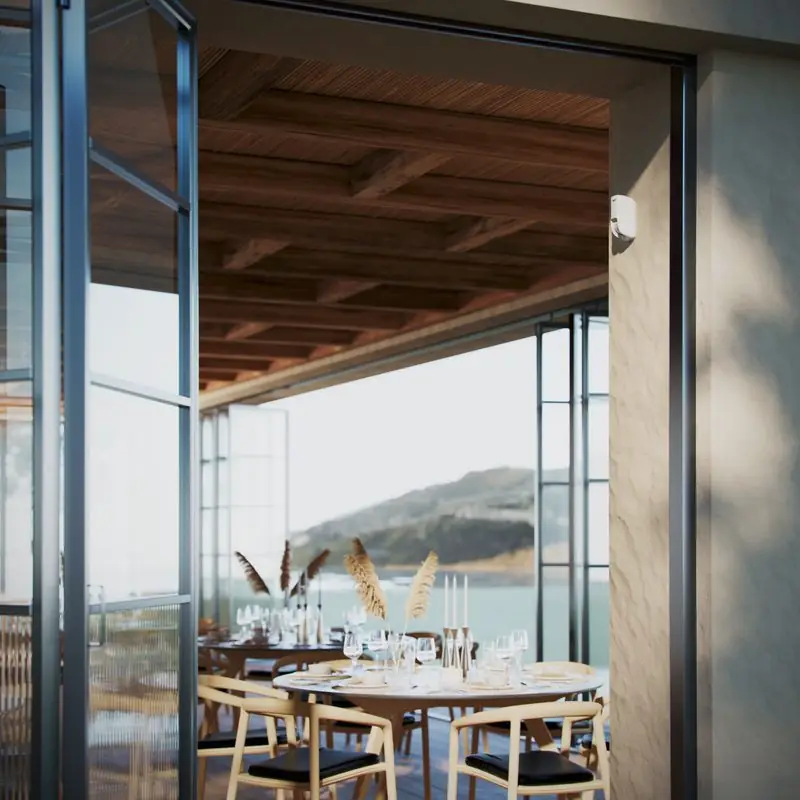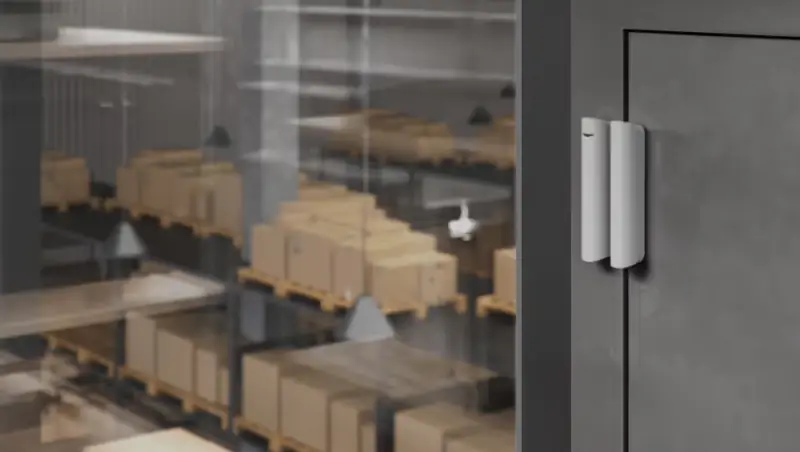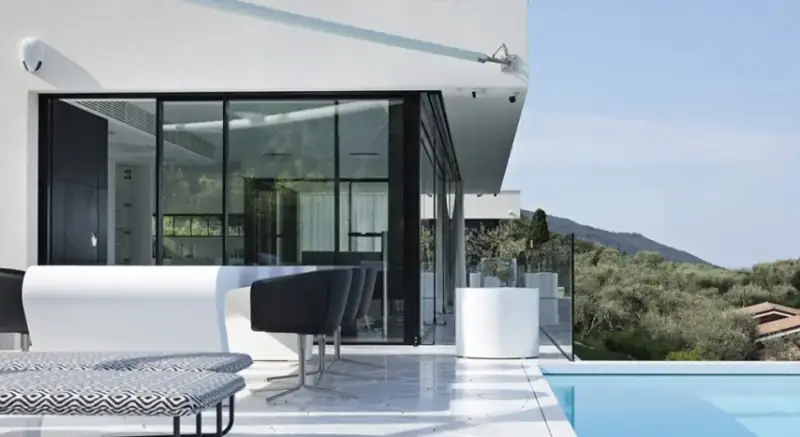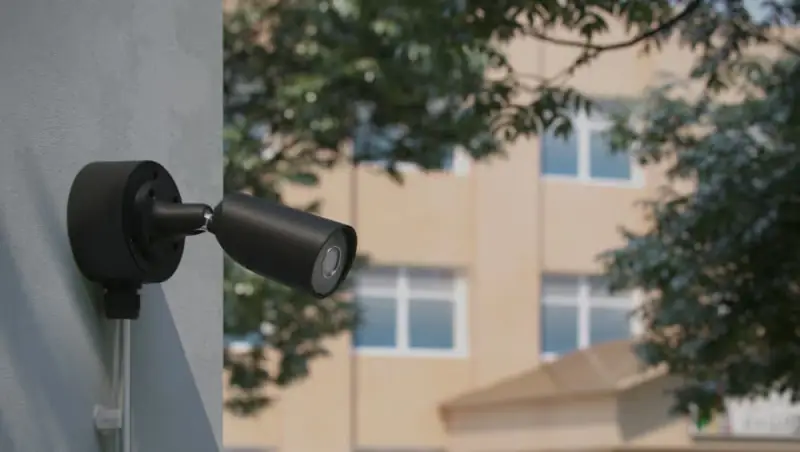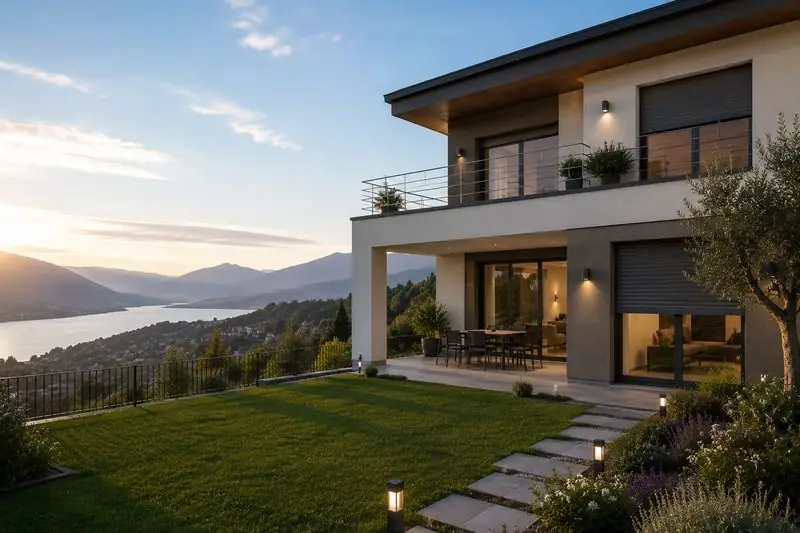

By day the driveway is a sequence of colours: pale stone, vegetation, people's clothes. In the evening the same elements carry different weight. A lamp becomes dominant, a surface reflects, the background blurs. The camera keeps watching the same place, but it is working in a different scene.
Night-time video surveillance is about this transformation. The design must understand which information remains available as the light fades and which conditions make it possible to preserve it.
A still scene tells only part of the story
To form an image, the sensor gathers light. In difficult conditions, exposure time is one of the factors that shape the result: lengthening it can make a static scene more visible and, at the same time, blur a moving subject. This relationship is described by one manufacturer in its treatment of low-light imaging.
A photograph of the empty garden therefore leaves the most interesting question open: what happens when someone walks across that garden? Useful quality must also be considered in terms of movement. The balance between sensor, optics, lighting and processing changes what the image is able to convey.
Infrared illuminates in a different way
Many systems use near-infrared illumination to record in the dark. This technology uses light that the human eye does not normally see, but which suitable sensors can detect. It is distinct from thermal imaging, which works with the thermal radiation of objects. The difference is explained in the paper IR in surveillance.
Understanding this distinction avoids inappropriate expectations. An infrared image renders the scene in its own way, different from normal colour vision. The information sought must be consistent with the type of image available, without turning a night mode into a vague promise of seeing everything.
Light also belongs to architecture
Imagine a terrace lit to make evenings outdoors pleasant. Aesthetic choices highlight some elements and leave others in half-light. Security enters into dialogue with this design: paths, light sources and surfaces all contribute to the scene being observed.
Adding light everywhere would be a response insensitive to the place. The design work consists in coordinating needs: people's comfort, respect for the environment and video information. The position of a light fitting or a different distribution of light can have both architectural and functional significance.
The seasons also alter the balance. Denser foliage, a new piece of outdoor furniture or a different use of the terrace change what the camera sees, even though it stays in the same position.
A characteristic such as colour may carry different weight depending on the purpose. Describing a route or distinguishing a person's position requires different information from recognising a shade. The choice of night-time technology must be linked to this need. In this way images from different hours can perform a consistent task, even when their visual rendering differs markedly from daytime.
Night enters the design from the outset
The night-time scene deserves its own assessment, linked to the daytime one. This makes it possible to give the images a realistic role at different hours, while keeping a coherent view of protection.
With professional video surveillance, NetCom relates technology to the characteristics of the place. You can read more about the relationship between light and display and the security of a villa occupied at night. To discuss your context, contact NetCom; further reading is available in the security library.